Artist Bio
Christian Masarati Letts (b. 1978, London) is a painter and musician based in Los Angeles. His work stages collisions between religious iconography and classical mythology, investigating faith, performance and transcendence as parallel systems for negotiating meaning.
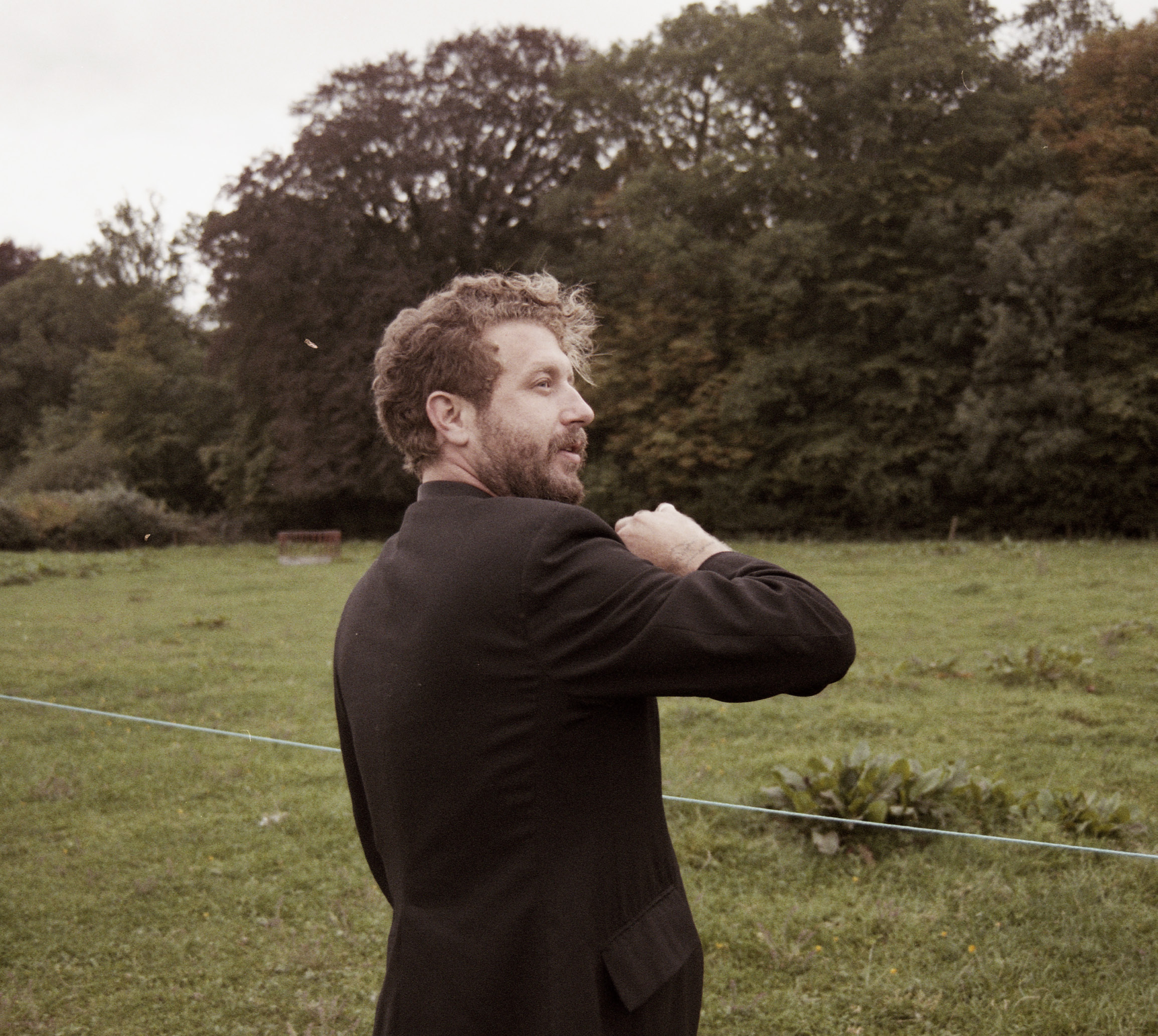
Letts came to painting through a parallel life in music, performing internationally as a founding member of Edward Sharpe and the Magnetic Zeros. The discipline of collective performance — its ritual and risk as well as its catharsis — quietly informs the studio practice he has cultivated since.
Earlier series, including Pietro, treated the figure as both relic and instrument, drawing on Renaissance composition and the residue of devotional painting. The current series, St. Bronco, opens those private cathedrals outward into the public liturgy of the rodeo.
His paintings have been exhibited in Los Angeles and Georgia and are held in private collections in the United States, Europe and Lebanon.
St. Bronco
Christian Masarati Letts’ St. Bronco folds religious iconography, classical myth and Americana into a single volatile image system. Drawing on his experience of first encountering the American rodeo as an immigrant, and recognising in it the same structures of martyrdom and heroic spectacle already lodged in his imagination, Letts repositions the rodeo’s arena as a contemporary site of ritual. Saints, riders and the creatures that occupy the canvas circulate through the compositions as unstable archetypes, oscillating between sacred symbol and brute force. Particularly insistent are the recurring unicorn-horned creatures, where purity and brutality collapse into a single unresolvable image — the horn rendering the animal mythical without diminishing its danger, acting as a bridle for myth itself. Bull riding becomes liturgy, where transcendence and catastrophe are inseparable.
The formal logic of the work intensifies this tension. Monochromatic figures on raw, unprimed canvas carry the irreversible immediacy of graffiti and childhood mark-making, ancient and provisional at once. Letts’ pairing of industrial acrylic enamel with traditional oil enacts a quiet but decisive inversion: saints, rendered in oil, recede into the canvas as though sedimentary, while the creatures painted in enamel assert themselves on the surface with near commercial force. The sacred doesn’t govern the spectacle so much as risk being swallowed by it. What emerges is a symbolic universe in which faith, folklore and fantasy operate not as opposing categories but as parallel languages for negotiating meaning — sincere, and perpetually on the verge of coming apart.
“Faith, folklore and fantasy are not opposing categories but parallel languages for negotiating meaning — sincere, and perpetually on the verge of coming apart.”